

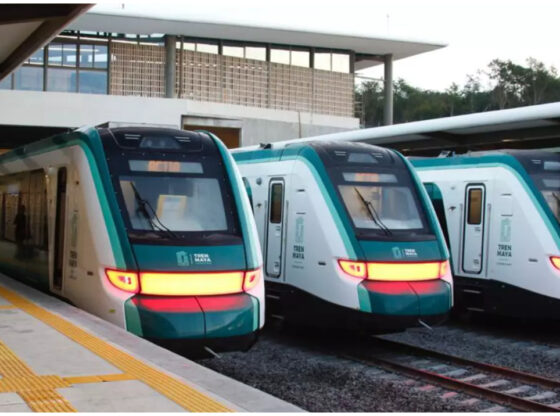

MEXICO CITY.- The Mayan Train, one of the emblematic projects of the six-year term of Andrés Manuel López Obradorfaces growing questions due to its financial performance.
According to official figures and analysis by specialists, the railway system presents annual losses that reach 2 thousand 500 million pesosequivalent to 10 times more than your income.
“Seen from a financial point of view, it is a losing project, since in 2024 it reported 275 million pesos in ticket and souvenir sales, but its operating expenses were 2,837 million pesos, that is, 10 times its income.”.
This is how he explained it Gerardo Herreraacademic of the Iberoamerican University.
According to the specialist, even with a sustained increase in the number of users since its inauguration, the Mayan Train would take between 10 and 20 years to achieve profitability.
During that period, the federal government will have to continue subsidizing its operation, which could raise the fiscal cost to 25 billion pesos in a decade.
Federal subsidies and questions about their sustainability
For the business expert, the magnitude of the subsidy raises doubts about its viability: “What business sustains itself when its sales are between 2 and 10 percent of its operating expenses?”.
Herrera compared the annual cost of the project with the budget of the Federal Consumer Protection Agency (Profeco), of approximately 1,400 million pesos, to measure the weight of the subsidy.
In this context, Carlos Barredaa specialist in the railway sector, pointed out that one of the biggest challenges of the project will be justifying federal subsidies.
He remembered that The Mayan Train is a mainly tourist service and of a “premium” nature, so “its users should pay the cost of the ticket in full”.
Barreda also warned of possible distortions in competition with road freight transportation, especially in the sections where it will coexist with subsidized freight trains.
He added that, in a first stage, the transportation of oil, derivatives and construction materials in the Palenque-Progreso corridorconnected to the interoceanic corridor.
Social impact, cost overruns and operational challenges
Despite doubts about its profitability, specialists such as Benjamín Alemán Castilla They recognize positive impacts of the project, including greater regional connectivity, boosting tourism and job creation.
However, he stressed that these benefits coexist with strong operational and financial challenges.
The project went from an initial estimate of 140 billion pesos to more than 500 billionone of the highest cost overruns in recent public works.
Furthermore, demand has been lower than expected, with low passenger levels during 2024 and 2025which reinforces doubts about its financial balance.
The Mayan Train also faces criticism for its environmental impact and operational failures, while the cargo service—scheduled around 2030—will be decisive in improving its income and aspiring to a more sustainable operation.
With information from Reform