

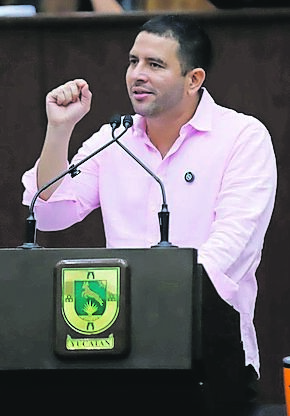

“We are not asking favors from the secretary of Administration and Finance; “We are demanding information that by law must be public,” said the deputy Javier Osante Solís by reiterating that transparency in the use of state resources is an obligation, not a concession.
The legislator of Citizen Movement He recalled, according to a statement, that a month ago he requested the Secretary of Administration and Finance detailed data on the execution of spending on social communication, because while the budget approved for 2025 considered 150 million pesoshe state government It had already earned 280 million between January and September alone.
“What was 280 million spent on? It is an exorbitant amount that must be explained,” he stressed.
“Paper holds everything, colleagues,” warned the legislator, pointing out that approving projects on paper does not guarantee their correct execution.
“In the budget we can authorize large works, but if we do not monitor compliance we are failing in our oversight work. Why ask for more debt if they cannot even tell us what happened to works that the majority of Q4 approved for 2025?”
“In these same offices we demand to know what the real physical and financial progress of the works and projects labeled in the Annex 15 of the 2025 Budget”.
Osante Solís pointed out that his requests are not “a whim or an occurrence” and recalled that last January MC denounced that the state government had not published the report for the fourth quarter of 2024 on the transparency portal.
“It wasn’t until we pointed it out that they started uploading the information. Transparency should not depend on us demanding it over and over again.”
The coordinator of the orange bench called on the legislative plenary session to assume its role responsibly, since they can discuss and approve budgets, but what is truly important is to monitor their execution and their transfer: “That is our duty to the citizens,” the statement says.
“They talk about transformation, brave honesty and a different government, but in administrative and legislative practice we continue to encounter walls of opacity and improvisation that hurt institutions. That is what must change,” he concluded.