

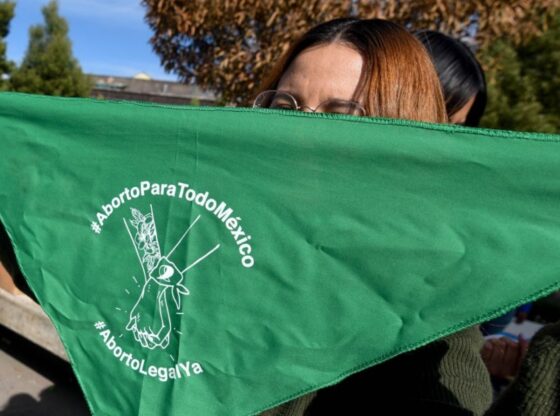

The Court’s decision guarantees immediate access to medical services, emergency contraception and legal termination of pregnancy, without legal requirements or authorizations.
Mexico City, December 3 (However).- The new Supreme Court of Justice of the Nation (SCJN) reinforced on Tuesday the protection of the right to sexual and reproductive health by invalidating various legal provisions that hindered access to medical care and abortion in Tlaxcala.
In a plenary session, the Court resolved the Unconstitutionality Action 89/2024filed against the Health Law and the State Penal Codewhich conditioned the care of victims of violence familiar or sexual at the beginning of a ministerial investigation or jurisdictional process.
The highest court concluded that such requirements “ignore the real urgency of care in these cases and ignore the barriers that victims face when reporting, such as fear, stigmatization and pressure or threats, which generates unjustified inequality in effective access to the right to health.”
🚨 #BreakingMinute In which #NewSCJN eliminates obstacles to accessing sexual and reproductive health care in Tlaxcala.
✅ The Plenary invalidated regulations that required victims of family or sexual violence to initiate legal proceedings before receiving medical attention and, therefore… pic.twitter.com/86xiTAed2P
— Supreme Court (@SCJN) December 2, 2025
Likewise, the provision that required authorization from the Public Ministry so that public health institutions could proceed, free of charge and with quality, to terminate pregnancy in cases of sexual violence and in the cases permitted by the local Penal Code, was invalidated. The Court recognized that this requirement violated the autonomy and right to decide of women and pregnant women.
“The SCJN recognized that subordinating this service to the authorization of the Public Ministry violates the right to decide of women and people with the capacity to conceive, by directly affecting their autonomy, freedom, development of personality and health in equality and without discrimination,” mentions the statement.
Another relevant point was the elimination of the rule that required the consent of those who exercise parental authority or legal representation so that girls and adolescents could access emergency contraception.
The #NewSCJN protects the right to health and legal termination of pregnancy in Tlaxcala.
The information here: ▶️ pic.twitter.com/BiHp8hWYoA
— Supreme Court (@SCJN) December 2, 2025
The plenary session held that this requirement constituted a significant barrier to the exercise of their reproductive rights and could deter them from seeking timely medical attention.
The decision does not eliminate protection mechanisms, since the rule itself requires reporting to the law enforcement agencies and the State System for the Comprehensive Development of the State Family (DIF) in cases of violence.
“This decision does not eliminate the protection mechanisms for girls, boys and adolescents, since the SCJN concluded that the norm itself establishes that, in cases in which they are victims of family or sexual violence, the health institution must inform the corresponding justice administration body, as well as the State System for the Comprehensive Development of the State Family, so that they can intervene in accordance with their powers.”
The #NewSCJN protects the right to health and legal termination of pregnancy in Tlaxcala.
The information here: ▶️ pic.twitter.com/BiHp8hWYoA
— Supreme Court (@SCJN) December 2, 2025
Exceptionally, the SCJN also invalidated articles of the Tlaxcala Penal Code that absolutely criminalized the interruption of pregnancy, reiterating that this decision constitutes an essential component of dignity, the free development of personality and the right to decide.
Finally, the plenary session declared invalid the normative portion that limited the obligation to care for women and pregnant people only in urgent cases, by restricting conscientious objection. This ensures that access to legal termination of pregnancy does not depend on undue conditions.