

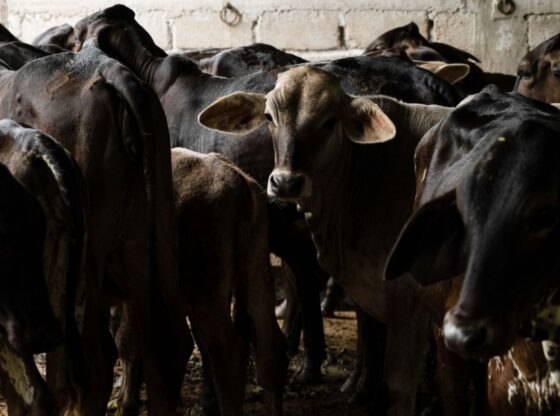

The national emergency seeks to protect livestock production and avoid economic losses due to the plague.
Mexico City, December 2 (However).- The Secretariat of Agriculture and Rural Development (Sader) formalized the activation of the National Health Emergency Device Animal after publishing the agreement in the Official Gazette of the Federation (DOF). With this, the alert for the presence of screwworm of the cattle went from regional to national level in Mexico.
The decision implies immediate actions in the eight animal health regions, due to the risk of the plague expanding to livestock areas in the north of the country considered free:
- Strict restrictions on the movement of susceptible animals.
- Detailed physical inspections at checkpoints.
- Preventive treatments and insecticidal baths to obtain the Zoosanitary Mobilization Certificate.
- Prohibition of moving animals with wounds or worms.
The rules apply to cattle, bison, sheep, goats, pigs, horses and birds, with different criteria depending on their origin. Transfers destined for slaughterhouses are exempt from certain treatments to avoid waste, although they will be subject to monitoring.
On November 30, the National Agri-Food Health, Safety and Quality Service (Senasica) reported on an isolated case of screwworm myiasis in Montemorelos, Nuevo León, in a female bovine from southern Veracruz.
The protocol for free zones was activated immediately: inspections, sampling and batch treatment.
The analysis confirmed that the infestation occurred before the arrival of the animal and that there are no other cases in the region. La Sader pointed out that the risk of establishment in Nuevo León is minimal, thanks to three factors:
- The constant release of sterile flies in a containment polygon.
- Unfavorable climatic conditions for insect reproduction.
- Immediate cleaning and inspection actions.
To protect the area, the authority deployed personnel for epidemiological tracking within a 20-kilometer radius, installed more traps and reinforced coordination with APHIS-USDA for the release of sterile flies in strategic areas.
The agency stressed that the activation of the device seeks to prevent the entry and spread of the screwworm, control it and eradicate it, in accordance with the Federal Animal Health Law and its regulations.