


Please note that we are not authorised to provide any investment advice. The content on this page is for information purposes only.
Meta Platforms is reportedly planning significant budget cuts for its metaverse division, Reality Labs, which houses projects like Meta Horizon Worlds and the Quest VR unit. This move suggests a re-evaluation of its long-term strategy, with an increased focus on artificial intelligence (AI).
Executives have reportedly discussed potential budget cuts as high as 30% for the metaverse group in 2026. The reductions are part of Meta’s annual budget planning process, where CEO Mark Zuckerberg has requested executives to look for efficiency, but the metaverse group faces deeper scrutiny.
Meta Platforms’ Reality Labs Business Is Losing Billions Every Quarter
Reality Labs has been a significant drain on Meta’s finances, losing over $70 billion since 2021. The segment posted an operating loss of $4.4 billion in the third quarter of 2025, continuing to weigh on the company’s operating income.
Analysts and investors have consistently urged the company to reduce its spending or demonstrate a clearer path to profitability.
The anticipated industry-wide momentum and mainstream adoption for metaverse technologies, particularly Meta’s consumer-facing products, have been slower than initially projected.
Notably, despite significant competition from premium devices like Apple’s Vision Pro, Meta’s affordability strategy gives it a commanding market share. The Quest lineup holds a dominant position, capturing an estimated 74.6% of the AR/VR market in recent reports. However, the segment hasn’t seen much growth, and sales of Meta’s VR headsets have sagged.
While Mark Zuckerberg has long defended the metaverse, projecting it as a long-term driver, these proposed cuts signal a significant recalibration of that long-term bet, prioritizing the near-term demands of AI and satisfying investor calls for fiscal discipline.
Meta Is Focusing on AI Instead
Meta has been aggressively redirecting its public focus and capital expenditure toward building advanced AI models (like Llama and Meta AI) and related hardware (like the Ray-Ban smart glasses). The Q3 2025 earnings report highlighted this, with the company raising its 2025 capital expenditure guidance to $70-$72 billion, primarily driven by AI infrastructure investments. The company views AI as a more immediate and generationally paradigm shift.
Crucially, management warned that 2026 capital expenditure dollar growth would be notably larger than 2025’s growth and that total expenses would grow at a “significantly faster percentage rate” due to continued AI build-out.
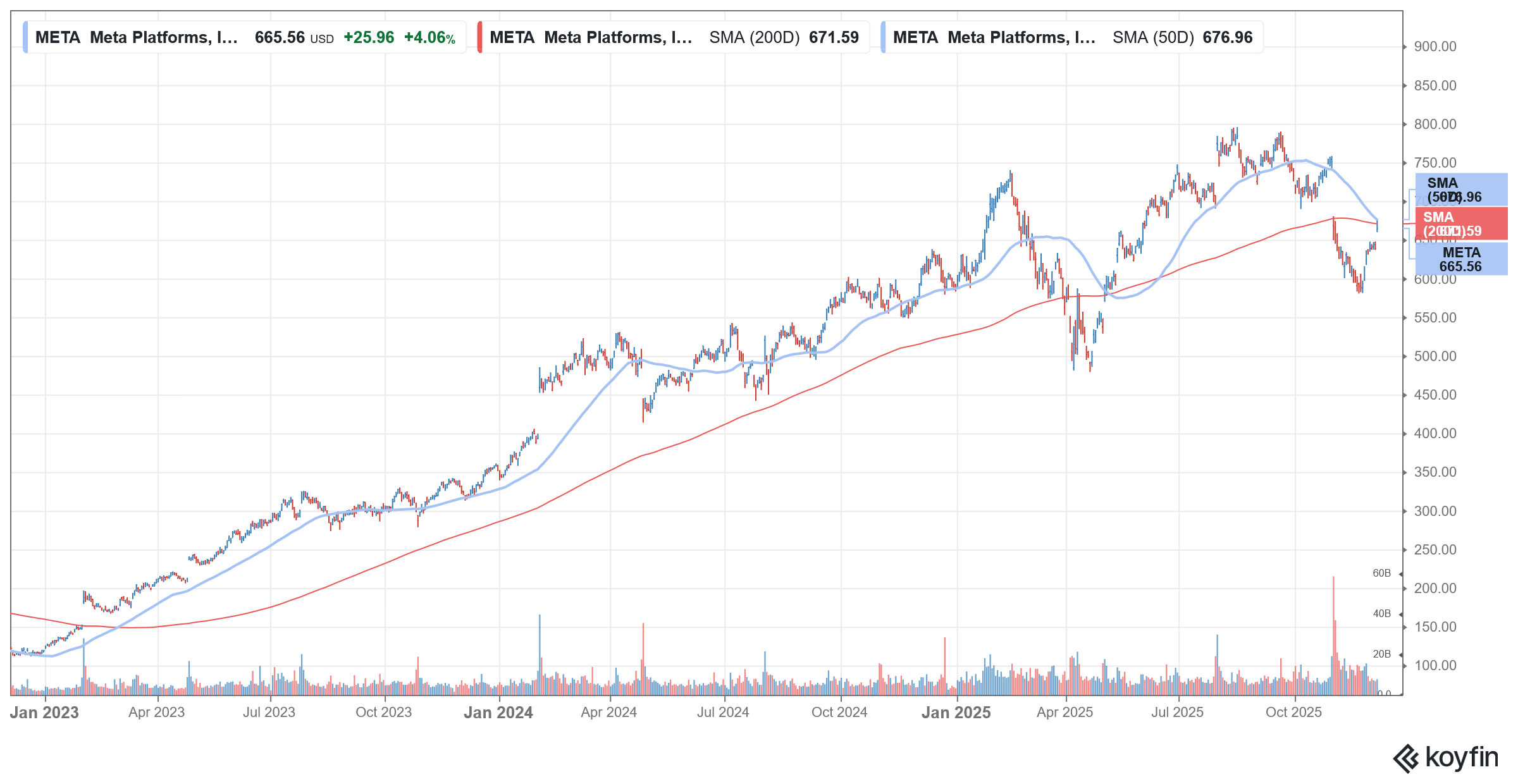
Meta stock plunged following its Q3 2025 earnings report, despite the core advertising business delivering strong revenue and user growth. The sharp decline was a direct reaction to two major concerns: an aggressive, and seemingly open-ended, increase in AI capex and a large, one-time accounting charge.
Unlike Microsoft and Google, which can offset their AI infrastructure costs by selling cloud services (Azure/Google Cloud) to external customers, Meta is building its infrastructure primarily for internal use (improving ads, content ranking, and future products). This lack of an immediate, external revenue stream makes the massive spending inherently riskier in the eyes of the market.
Glasses Could be the Next Frontier for Tech Companies
Meanwhile, even as Meta is scaling back its metaverse bets, it is doubling down on smart glasses. Meta is currently the dominant player in the consumer smart glasses space, largely thanks to its strategic partnership with eyewear giant EssilorLuxottica (owner of Ray-Ban and Oakley). The glasses are deeply integrated with Meta AI, powered by the company’s Llama large language models.
The AI glass market is a pivotal platform for the next computing paradigm, moving interaction from the smartphone screen directly to a hands-free, real-world experience. Even Apple, which is projected to become the biggest smartphone seller this year, is reported to have doubled down on glasses while scaling back its VR headset ambitions.
While Google’s initial attempt with “Google Glass” faced challenges, the company is now refocusing its strategy, leveraging its powerful AI models and Android’s extended reality (XR) ecosystem.
Google has partnered with hardware companies like Samsung Electronics for its Galaxy XR headset, supplying AI features to the broader market. The company is investing in AR hardware development and optimizing its supply chain, signaling a long-term commitment.
While OpenAI itself does not have a branded AI glass product in the market, it has been working with former Apple design chief Jony Ive on a new AI device, which is rumored to be a consumer wearable, signaling a potential direct entry into the hardware space.
Alibaba Launches AI Glasses
Alibaba has launched two variants of the Quark AI glasses, whose mass sales began in China last month with plans for global sales to follow next year. The glasses function as a hands-free gateway to Alibaba’s AI and commerce ecosystem, enabling a variety of real-time functions like translation, online shopping. It also integrates other Alibaba apps like Alipay for visual payment verification and hands-free payment.
The flagship Quark S1 is priced at RMB 3,799 (around $538) and features dual micro-OLED displays for AR overlays, dual chips (including a Snapdragon AR1 processor), and a swappable dual-battery system for up to 24 hours of use. The variant is designed for AR and high-performance AI tasks.
The second model, Quark G1, is priced at RMB 1,899 (around $268). It has an audio-first design and is lighter for everyday wear, but lacks the micro-OLED displays of the S1.
Meta Stock Rises on Reports of It Trimming Metaverse Spending
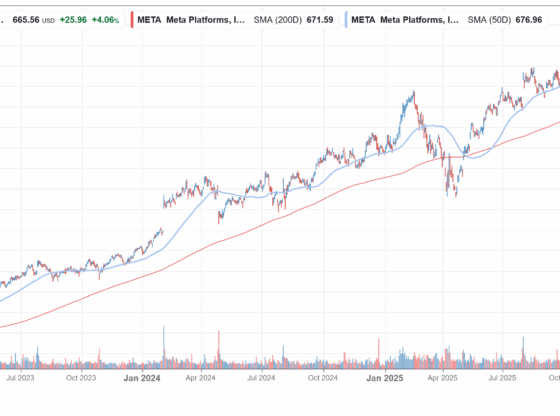
Meanwhile, Meta stock is trading higher in early price action today on reports that it is cutting spending towards its Reality Labs. The loss-making venture has been eating into the otherwise stellar earnings that Meta has been reporting, and in April, Mike Proulx, a vice president at research and advisory firm Forrester, forecasted that the Facebook parent would “shutter its metaverse projects, like Horizon Worlds” before the end of the year.