

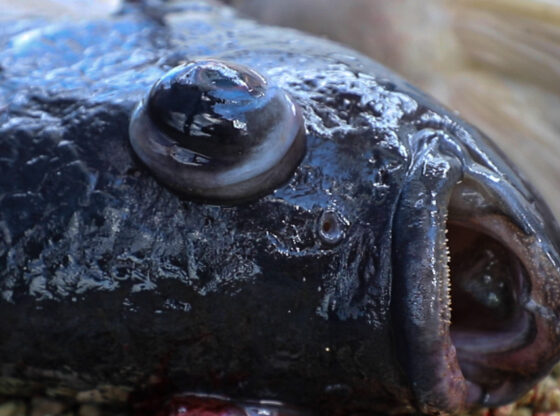

For a long time we have been taught to see fish as “natural resources”, as if they were minerals, oil or wood. Something that is extracted, counted and exploited. Not as individuals, but as volumes. Tons. Biomass. Figures.
This utilitarian vision has justified their lives being left outside the framework of legal, moral and political protection that is beginning to be recognized for other animals. And yet, the science is clear: fish are vertebrates, they have a central nervous system, they feel pain, they experience fear, they learn, they cooperate, they remember, and they seek to avoid suffering.
The question, then, is not whether we should protect them. The question is why it took us so long to do it.
An animal invisible even to the law
Despite everything we know about fish, our laws still treat fish as industrial inputs. In most regulations they are mentioned only as “fishery resources,” which has allowed millions of them to live and die in conditions unthinkable for any other animal.
Fish farms, aquaculture farms where fish are raised for consumptionare one of the most invisible systems of exploitation and, paradoxically, one of the fastest growing in the world. The same thing happens in Mexico. Without any mandatory welfare standards, these places operate under the logic of maximizing production at the lowest possible cost. The result? Systems designed for efficiency, not life.
What does a fish live in a fish farm?
Talking about fish farms is not talking about crystal clear water and fish swimming freely. It is talking about extreme overcrowding, of bodies that collide with each other in every movement, of constant stress, of wounds that do not heal, of internal predation, of parasites, of lack of oxygenation, of diseases that spread rapidly due to density.
This is talking about fish that die slowly from suffocation when taken out of the water or from bleeding to death without prior stunning. Of animals that spend their entire lives without being able to swim freely, without stimulation, without space, without the possibility of escaping pain.
If we described these same practices applied to birds or mammals, the outrage would be immediate, but when it happens underwater, we don’t seem to care.
Why is it urgent to recognize them as animals?
Recognizing that fish are animals and not resources to be exploited is an act of elementary justice. Change the conversation. Changes the obligations of the State. Change industry practices.
When the law names them as “living beings that feel pain,” it is no longer acceptable for them to be raised in systems that condemn them to a life of extreme suffering.
This reform would allow establishing:
- Density limits to avoid overcrowding
- Minimum water quality standards
- Proper management
- Transportation that reduces stress and mortality
- Humane slaughter methods
- Supervision and sanctions for those who violate these principles
It is a necessary transition for a country that already recognized in its Constitution that animals must be protected and respected. Ethical coherence requires that this recognition also extends to those who live underwater.
What’s at stake
Mexico is facing a historic opportunity. The initiative presented in Congress not only places our country in line with international scientific evidence, but could make it a pioneer in Latin America in the legal recognition of fish welfare.
But advances in animal matters have never occurred by inertia. They have been the result of social pressure, mobilization, activism, research that reveals uncomfortable truths and the push of organizations such as Animal Equality.
The aquaculture industry is already one of the largest in the country. If we do not regulate today, what grows tomorrow will be more difficult to correct. And more cruel.
The fish feel. And that forces us to act.
See fish as animalsand not as units of production, invites us to a profound change in how we understand well-being and justice. It reminds us that life is not worth its wings, its size or its emotional closeness to us.
That all lives with the capacity to suffer deserve protection. Protecting fish in fish farms is recognizing that truth. It is taking a step towards a more just country and it is assuming that compassion must also be transferred to water.