

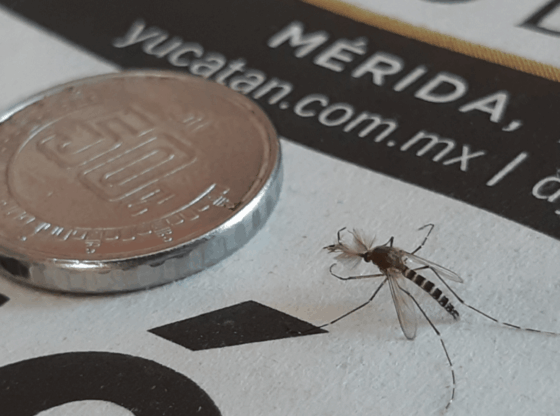

The Ministry of Health confirms the reappearance of chikungunya in Yucatán, after seven years no cases; know symptoms and how to prevent it. Also warn about high transmission of dengue.
Mérida, Yucatán.- After seven years without cases, the chikungunya reappeared right in the middle of one of the most active periods of transmission of dengue and in a context marked by the arrival of mosquitoes capable of carrying various viruses.
The return of this disease, absent since 2018combined with a year that will accumulate more than a hundred dengue infections – mainly type con alarm signs— and the detection of invasive species such as Aedes vittatushas configured a risk panorama that requires strengthening the health surveillance.
It must be remembered that in September 2024 it was registered for the first time in Yucatan the presence of the mosquito Aedes Vittatuswhich like the Aedes Aegipty and the Aedes Albopictus can transmit dengue, zika, chikungunya and yellow fever.
Chikungunya reappears in Yucatán after 7 years without cases: SSA
Data of the Federal Ministry of Health (SSA), corresponding to epidemiological week 47 (November 16 to 22), indicate that Two cases of chikungunya were confirmed in Mexico: one in Yucatan and another in Quintana Roo.
In total, the Yucatan Peninsula adds four infections so far this year.
Although Yucatán had not recorded cases since the end of 2018, the reappearance of the virus shows that these mosquito-borne diseases can be reactivated when environmental and biological conditions favor the proliferation of their vectors.
- Dengue continues to be the Arbovirus with greater impact on the entity. The most recent epidemiological report counts 187 confirmed cases: 80 not serious, 99 with alarm signs, and 8 serious.
- In contrast, official reports of the Epidemiological Surveillance System show very limited circulation of Zika in 2025.
Until epidemiological week 18, only one case had been confirmed in Veracruz and none in Yucatán. Despite its low presence, the disease remains under constant monitoring due to its risks for pregnant women and newborns.
Why does chikungunya fever occur?
The combination of prolonged rain, high humidity and warm temperatures typical of the tropics creates ideal conditions for Aedes aegypti y Aedes albopictus They reproduce easily and maintain transmission for most of the year.
Specialists point out that the hot and humid climate of the southeast could drive greater circulation if control measures are not reinforced.
Chikungunya virus, what is it
It’s a virus that is transmitted to humans through the bite of infected mosquitoes of the genre House of Egypt y Aedes albopictuswhich is the same species of mosquito that transmits dengue. It was recently reported that the disease is also transmitted by Aedes vittatus.
It was first described during an outbreak in southern Tanzania in 1952, reports the official website of the SSA.
Why is it called chikungunya?
Chikungunya is a word from idiom Makonde which means “to bend”, and represents the hunched appearance that people who suffer from this disease take, due to the severe joint pain that they present.
What are the symptoms?
Symptoms appear 4 to 8 days after being bitten by an infected mosquito. The most common symptom is fever greater than 39°C, joint pain and any of these:
- Headache
- Nausea
- Fatigue
- skin rashes
- A relevant characteristic is that the person “doubles” in pain.
- Symptoms can be mild and can sometimes be confused with dengue.
What should I do if I have these symptoms?
Go to the health unit to be treated and, if applicable, to apply the confirmatory test; The doctor will prescribe treatment to relieve pain and fever.
In addition, it is recommended to rest in bed and drink plenty of fluids to avoid dehydration.
What is the difference with dengue?
Muscle and joint pain is more intense in chikungunya fever, it affects hands, feet, knees, back and can make people unable to walk or even open a bottle of water.
In Dengue, hemorrhages can occur and can be complicated by fever.
How is the diagnosis made?
Through a blood test.
Serological tests are used to measure the amount of IgM and IgC in the blood.
How is chikungunya prevented?
There is no vaccine to prevent infection, so the only way to protect yourself is by following these preventive measures.
- Reduce the number of water tanks that can serve as mosquito breeding sites, such as outdoor tires, buckets, puddles, containers, among others.
- Do not expose your skin to mosquito bites, use repellents, long-sleeved shirts and long pants, as well as mosquito nets.