

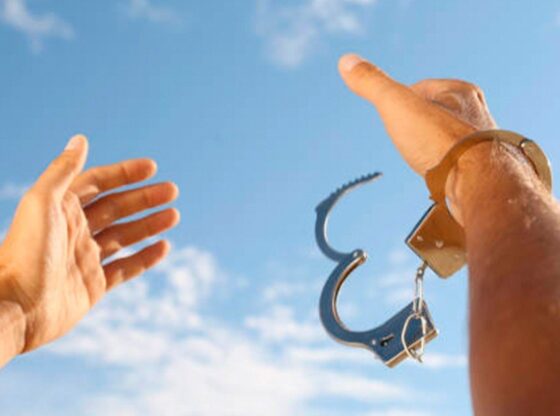

One of the most certain experiences we have is that we act freely, that we choose for ourselves, that we enjoy what is known as free will. This experience is so genuine that it makes us instinctively reject the possibility of being puppets moved by another. Our self is experienced as autonomous and when we are forced to act in one direction or another, we feel that those actions do not belong to us, that we were not their authors and we say that we were forced to carry them out against our will. We feel free, we know we are free.
Will this certainty be true? (Remember that this column is an invitation to think, and thinking is precisely what we do when we dare to question, to cast doubt on our firmest convictions.) Is it true that we are free? Let’s look at the problem closely: there is another statement that enjoys very wide credence. The fact that human beings are moved by ideas, that we act by ideas. Which does not mean that we are always consistent or that everyone acts as they think; However, when someone deviates from the ideas they subscribe to and acts in the opposite direction, they justify themselves by citing other ideas. Ideas, in short, are what is always behind our actions. The question is, then, where do the ideas that govern us come from? Are they perhaps innate? No. Everyone knows that we are born practically as a blank slate, and that the ideas that end up nesting in us are acquired through education, socialization; that we take them from films, from social networks, from readings…, in short, from others: our ideas come to us from what we have heard from others. It is the environment that we have been in that imbues us with the ideas that we have for ourselves and for which we act the way we act; That is, the ideas we have are why we choose this or that.
I ask then: will we be free if that self, which is the one who decides this or that, is a self constituted by others and by the circumstances that have affected it? Let’s give an example to give more tangibility to the question: what would my self be like and what would I choose if instead of being born in Mexico in the 20th century, with all that this implies, it had occurred to me to come into the world in the 10th century in Norway and my parents had been Vikings? Would I have chosen this morning to dedicate myself to reflecting on these metaphysical questions to complete the delivery of this video column, or would I have chosen to continue my training in the use of the sword and the ax to earn a death heroic and thus aspire to be chosen by the Valkyries to access Valhalla and be there ready to accompany my god Odin to Ragnarök or final battle? I think the answer is obvious. We are the product of our time and the geographical coordinates that we were given; We subscribe to the ideas of our time and not even everything that each time contains, since we only take a small part: that very small part of our time that we have been able to learn about and have made our own.
My self, that self that is with which I choose and from which I choose, is nothing other than the result of chance. We are for or against, we value some things and reject others, we like certain foods and others disgust us, someone seems beautiful or horrible to us, by chance: by the chance that happened to us: we are the puppets of circumstances.
And in this circumstance, our role, the role we play, is to believe ourselves to be free, possessors of a magnificent free will that allows us to choose for ourselves.
Regarding the strength of the ideas that one accepts as valid, and that ultimately are what make us choose and decide our lives, I have often recounted an experience that I had the fortune of living in Uruapan, the night I met the last heir of the Paricutin volcano. She was the granddaughter or great-granddaughter of the Purépecha indigenous person on whose property the volcano erupted, and she told me how her ancestor was plowing his land and discovered, when he plunged his hoe into the ground, that there was an incandescent material and that the earth was opening due to the strength of a force that wanted to come out. He thought it was the devil struggling to escape from the depths of hell; He ran to the town to warn of the danger, and the entire community returned to the property armed with buckets containing holy water to prevent the devil from jumping to the surface. When the army buses arrived to evacuate the site, the community (which had never seen buses) thought that the devils had already left and they had to chase them and put them on the buses; Everyone was screaming out the windows as if they were being swallowed and one person died of a heart attack on the running board of the bus. The question I have been asking myself since then is: where did that person die, on the running board of the bus or in the jaws of the devil? That’s how determining the ideas we have about things are, and from those ideas and through those ideas we act. Let the initial question remain in the air: are we really free?