


Published On 12/12/2025
|
Last update: 08:23 (Mecca time)
The Jewish Festival of Lights (Hanukkah) falls on the eve of next Sunday, and although the first day of the holiday falls on the 15th of December, it is expected that the mass settlers’ incursions into Al-Aqsa Mosque will begin on Sunday.
The Jews celebrate the Festival of Lights for 8 days, during which they light candles to commemorate the victory of the Hasmoneans in the rebellion against the Greeks, and the replacement of Greek rule by Jewish rule in Jerusalem, a change that occurred in the second century BC – according to their claim – as the Jewish legend says that when the Hasmoneans entered the alleged temple they found only a small oil can to light the menorah, but a miracle happened and the lighting lasted for 8 days.
Extremist temple groups insist on storming Al-Aqsa Mosque on this holiday, and the invaders deliberately lit candles inside it, and are still trying to bring the menorah into its courtyards.
Among the violations recorded last year were the intruders deliberately performing Biblical rituals and prayers during which they wore tefillin wraps (black wraps worn by Jews during prayer), and they also lit candles inside the mosque, and National Security Minister Itamar Ben Gvir was among the intruders on this occasion.
According to statistics from the Islamic Endowments Department in Jerusalem, 2,556 male and female settlers stormed Al-Aqsa during this holiday last year, while 1,332 stormed it in 2023, and 1,800 the year before.
As part of the annual preparations for this holiday, a huge candlestick was placed on December 7th in Al-Buraq Square adjacent to the western wall of Al-Aqsa, to complete the ritual of lighting a torch every day inside the square at sunset. Candlesticks are also set up to light them every night in front of the doors of the mosque, especially the Mughrabi and Lions Gates.
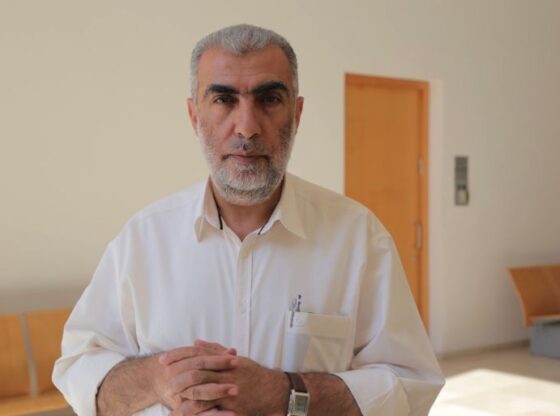
In a question posed by Al Jazeera Net to the political and Islamic activist Kamal Al-Khatib about his opinion on the reason why extremist groups insisted on storming Al-Aqsa Mosque on the Eid of Lights, even though it is one of the holidays that was not imposed by the Torah, but rather was invented by the priests to celebrate a historical event, he said: “And we add to this holiday the “Sigd” holiday for the Falasha Jews, which they invented and began calling on the Ethiopian Jews to storm Al-Aqsa during it.”
A struggle over place
Al-Khatib stressed that this stereotype in dealing with Al-Aqsa clearly indicates that the issue is an issue of conflict over land and place and has nothing to do with religion, and that it is related to a blind and hateful ideological project that sees the quest to control the mosque as its main goal.
Regarding what the settlers are seeking to achieve in Al-Aqsa this year after they succeeded in previous years in introducing candles and lighting them in the squares, Al-Khatib said: “We know that the settlers and the religious groups behind them, and above them the parties of which they are an extension, and the government that sponsors all settlement projects, have always adopted a step-by-step policy, meaning that they move forward one step in their projects in Al-Aqsa Mosque and then evaluate the Palestinian, Arab and Islamic reaction.”
Based on the reaction, the next step will be taken. Unfortunately, in previous years – according to Al-Khatib – they knew full well that their steps met with dull and timid reactions, starting with lighting candles in the mosque, passing through the issue of offerings, or praying that was forbidden and then became mumbled and then in a loud voice, and not ending with demanding the introduction of books into the squares, and in the face of these dull responses, they were preparing for the next step to be clearer and stricter in their projects.
The Feast of Lights, or what is known as (Hanukkah), during which the Jews light candles to celebrate what they call the victory of the Hasmoneans (142-63 BC) in the rebellion against the Greeks and the replacement of the Greek rule of Jerusalem with the Jewish one, according to their story. Learn about the Festival of Lights (Hanukkah).
For more: pic.twitter.com/FSWj5rihn0– Al Jazeera Net | Jerusalem (@Aljazeeraquds) December 25, 2024
“Turn your back” stage
Sheikh Kamal Al-Khatib described the current stage as a stage of “turning your back” at the level of Arab and Islamic regimes, states, and governments, and this is matched by the policies with which the Israeli government confronts our people inside Palestine and Jerusalem, which prepare the situation for more escalatory steps. This is what we can see in the upcoming Festival of Lights, and what we can see more and more in the coming Ramadan and after it with the beginning of the Jewish Passover and the holiday seasons that follow it.
At the conclusion of his speech, Al-Khatib answered the question: What is the way to stop violations during the first two kisses? By saying: “This question is difficult and we become ashamed of ourselves when it is asked to us and when we answer it… We are always asked: What should we do and what should we say to the Arabs and Muslims?”
He answered without hesitation that in light of the situation of Arabs and Muslims “turning their backs” on Jerusalem and Al-Aqsa, with the continuation of the policy of gagging mouths, and the iron grip that the regimes exercise over their people so that they do not win for Jerusalem and Al-Aqsa, Al-Aqsa remains the cause of our people “whose suffering we know in light of the ongoing bloody massacre in Gaza and a blatant war in the West Bank.”
Therefore, the people of Jerusalem and the people of the Palestinian interior are the safety valve, and they are the ones who must not hesitate to pay the Rabat tax and communicate with Al-Aqsa. “We do this so that God will fulfill a matter that has already been done, and until that day comes when the nation realizes that it must do greater than that, in order to end this situation and break the restrictions on the blessed Al-Aqsa Mosque.”