


Published On 6/12/2025
|
Last update: 12/7/2025 00:12 (Mecca time)
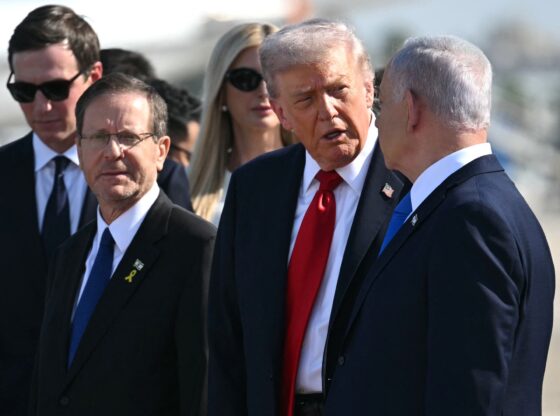
Israeli media said, on Saturday, that US President Donald Trump has in recent weeks intensified his pressure on his Israeli counterpart, Isaac Herzog, to push him to pardon Prime Minister Benjamin Netanyahu in corruption cases in which he is being tried.
In response to the US President’s pressure, Herzog was quoted as saying: “I respect Trump, but Israel is a democratic state.”
Last Sunday, Netanyahu – who is wanted by the International Criminal Court on charges of committing war crimes in Gaza – asked the Israeli president to grant him a pardon for the corruption charges against him, but without pleading guilty or retiring from political life.
Since the beginning of his trial in Israel on corruption charges, Netanyahu has refused to admit guilt, and Israeli law does not allow the president to grant pardon except after pleading guilty.
Intense pressure
Israeli Channel 12 reported that Trump intensified during the recent period “his direct messages, starting with his speech before the Knesset in which he called on Herzog to pardon Netanyahu, through media positions and statements on social networks, all the way to an official letter he addressed to the President of Israel urging him to end the judicial files against Netanyahu.”
She pointed out that Trump’s intervention has become part of a “broad political and media pressure campaign”, supported by prominent figures on the Israeli right, to push Herzog to take a decision that might stop Netanyahu’s trial in the corruption files.
The channel reported that Herzog is already considering a practical path to deal with Netanyahu’s pardon request, which includes multiple scenarios, including the formation of an official investigation committee into the October 7, 2023 attack as part of a comprehensive settlement that paves the way for granting the pardon.
Last November, Netanyahu’s government decided to form an informal investigation committee into the events of October 7, which was strongly criticized by the Israeli opposition, considering that the government was “escaping the truth” and refusing to form a committee with powers.
Netanyahu opposes moves to form an official investigation committee into his government’s failure to confront the attack by the Islamic Resistance Movement (Hamas), and refuses to bear any responsibility for the failure.
Possible settlement
According to Channel 12, Herzog is “also studying the possibility of pushing a settlement between Netanyahu and the Public Prosecution, or another legal formula that could get the judicial file out of the stalemate, in light of the conviction he expressed to those close to him that the case is stifling the political system and has a toxic effect on Israeli society.”
These developments come, according to the same source, in light of a tense internal scene and sharp criticism launched by prominent judicial figures, including former President of the Supreme Court Esther Hayut, who warned of a “dangerous decline in the rules of the democratic game” if Netanyahu is pardoned.
Observers believe – according to the channel – that the combination of public American pressure and the path of searching for an internal settlement makes Herzog’s upcoming decision among the most sensitive decisions of his term, amid widespread political anticipation of the possibility that the amnesty, if completed, will constitute a turning point in the political map of Israel.
A public opinion poll conducted by the Lazar Institute in Israel showed a clear division regarding pardoning Netanyahu, as 38% of respondents supported granting Netanyahu a pardon without compensation, while 27% said they supported granting him a pardon on the condition that he admits guilt and retires from political life.
While 21% of respondents opposed granting him amnesty at all, and 14% of them said that they did not have a specific opinion.