

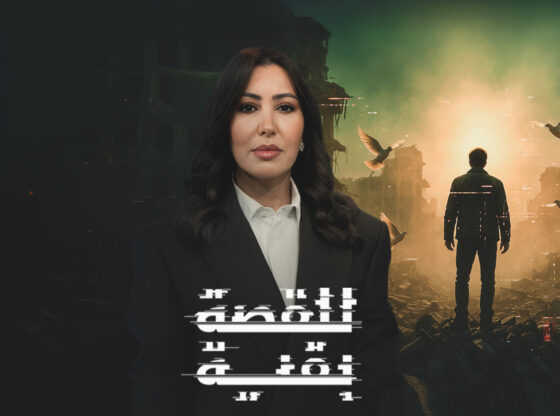

In an exceptional episode, the “The Story Has the Rest” program revealed one of the darkest files of the Israeli occupation, displaying exclusive photos, documents, and testimonies that suggest that its violations against prisoners do not stop at torture and murder, but extend to stealing their organs.
The episode, titled “Gaza Prisoners: Death Twice,” begins with a video investigation that places the viewer in front of corpses returned from occupation detention centers that were covered with surgical sutures extending from the neck to the lower abdomen, in a scene that is difficult for doctors to justify as a regular anatomical procedure.
The pictures documented by the medical team in Gaza showed traces of removal of internal organs and plastic bags inside the viscera, which raised strong medical suspicions that the matter went beyond a forensic examination to systematic removal of transplantable organs.
Read also
list of 4 itemsend of list
Doctors who participated in examining the bodies say that the marks of careful stitching and cleanliness of the wounds cannot be the result of natural decomposition, but rather indicate professional surgical intervention.
They confirm that the bodies of some prisoners arrived with their hearts, livers, or corneas removed, while other cases were recorded of bodies being returned months after disappearance, showing signs of cooling and preservation.
The investigation presents testimonies of liberated prisoners who spoke of terrifying scenes they experienced in Israeli prisons and field hospitals, where some of the wounded were transported alive after being wounded on the battlefield and then lost track of them forever.
One of them says that the prison administration was telling them that their colleague had died from his wounds, but no one was handing over the body immediately, but rather weeks later and his features had changed.
For his part, one of the Palestinian doctors who participated in receiving the bodies explained that Israeli procedures deprive Palestinian medical authorities of the right to immediate examination, as the bodies are returned within complex arrangements after a long period, and this allows any evidence of what happened inside the detention centers to be hidden.
He added that this pattern has been repeated since the beginning of the last war on Gaza, when hundreds of prisoners disappeared in mysterious circumstances.
Secret file
The investigation, which was based on intersecting documents and testimonies, also examined a legal and political context that enabled the occupation to transfer prisoners into a “secret file” that is not subject to oversight.
The Knesset approved amendments allowing the detention of “unlawful combatants” without trial or access to lawyers, which made hundreds of Gazans missing in detention, and this ambiguous legal framework is what allowed practices that contradict the Geneva Conventions and the Convention against Torture.
In the analytical part of the episode, Professor Ghassan Abu Sitta, President of the University of Glasgow in Scotland and a surgeon who worked in Gaza during the war, confirmed that what was presented in the investigation is not surprising to those who followed the occupation’s behavior inside the Gaza Strip.
He said that the occupation army treated the Palestinian body as a “scene of punishment,” starting with leaving the wounded to bleed to death and ending with using the bodies of martyrs as a source of human organs.
He added that Israel has, for decades, been facing similar accusations in which no independent investigations were conducted, which made it continue its practices with confidence with impunity.
Abu Sitta believes that the secrecy imposed by the military institution on places of detention and the transfer of bodies indicates an intention to hide evidence, and that what the investigation revealed represents a rare opportunity to reopen a file that has long been ignored.
He pointed out that the occupation does not hand over the bodies immediately, but rather keeps them in what are known as “cemeteries of numbers,” which allows it complete control over the fate of the body.
Professor John Quigley, professor of international law at Ohio University in Columbus, considered that what was raised in the episode amounted to war crimes and a flagrant violation of international humanitarian law.
Double crime
He said that any autopsy on the bodies of prisoners without the consent of their families is considered a violation of the Geneva Conventions, and that the theft of organs – if proven – represents a double crime that affects human dignity and the right to the body.
He added that international law requires Israel to conduct an independent and transparent investigation under international supervision, but the reality shows a lack of political will within the Israeli system for any serious accountability.
Quigley stressed that what was stated in the investigation intersects with previous reports by international human rights organizations that talked about the forced disappearance of Palestinian prisoners since the outbreak of the war, pointing out that the continued international silence encourages Israel to persist in violations.
He explained that the Security Council has the authority to refer these cases to the International Criminal Court, but the lack of will of the major powers prevents this.
For her part, Amal Al-Attar, the daughter of one of the martyred prisoners whose organs were suspected of being stolen, narrated how she received her father’s body weeks after his arrest and he looked completely different. She said, “His face was not as we knew it, and his chest and stomach were sewn with long threads.”
She confirmed that she requested an autopsy inside Gaza, but the Israeli authorities refused to hand over the death report or any medical documents, which deepened the family’s suspicions that they were facing a full-fledged crime.
Al-Attar describes that moment as “twice death,” once when the prisoner is killed under torture, and once when his body is violated after his death. She added that the families have become afraid to receive the bodies because of the shocking signs they bear, calling on the international community for an international investigation mission to put an end to this file that has been obscured for a long time.
The program concludes its episode with a call to open an independent international investigation supervised by medical and human rights committees, stressing that the continued closure of this file means perpetuating the “culture of impunity” that has always formed an umbrella for the crimes of the occupation.
Published On 4/11/2025
|
Last update: 00:55 (Mecca time)