


Published On 5/12/2025
|
Last update: 10:02 (Mecca time)
The African continent is witnessing profound security transformations with the withdrawal of prominent UN missions from Mali and the Democratic Republic of the Congo, which raises a fundamental question: Can the African Union fill the growing security vacuum amid weak funding and diverging political positions?
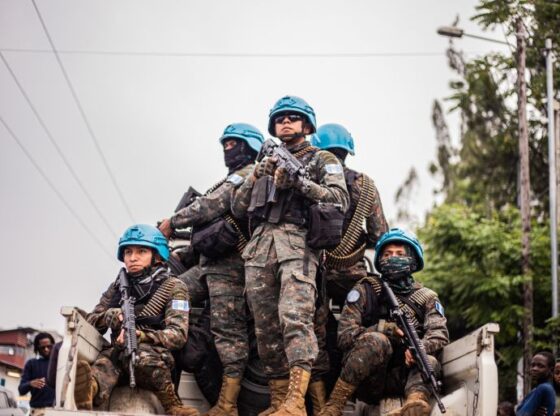
During 2023 and 2024, the United Nations ended two of its longest missions in Africa, the first in Mali, where MINUSMA forces withdrew at the request of the military junta, which considered their presence a factor in instability, and the second in the Democratic Republic of the Congo, where the MONUSCO mission faced popular criticism for its failure to protect civilians and curb armed groups.
With these two withdrawals, only four UN missions remained on the continent (Central Africa, South Sudan, Abyei, and Western Sahara), while the number of UN forces declined from 77,000 in 2016 to only about 35,000 in 2024.
This decline is not limited to Africa alone, but also reflects a global trend towards reducing peacekeeping operations.
Legal and institutional framework
The African Union has legal and regulatory tools to intervene in crises, most notably the African Peace and Security Council, which is the central body for making intervention and peacekeeping decisions.
The Union also established the African Ready to Intervene Force, a regional force distributed among five commands, but it was not fully activated due to weak funding and lack of political will.
In addition, there is the Committee of the Wise, which undertakes mediation and preventive diplomacy functions, and the Continental Early Warning System, which aims to provide timely information on evolving conflicts.
As for the Special Fund for Peace, it suffers from a chronic funding deficit despite the contributions of member states and international donors, which limits the Union’s ability to implement large-scale operations.

Outstanding field experiences
Darfur: from an African mission to a hybrid partnership
In Sudan, the African Union launched a peacekeeping mission in Darfur In 2004, it faced logistical and operational difficulties, and weak funding and authorization.
As the crisis continued, the mission turned into a joint operation with the United Nations (UNAMID) in 2007, becoming the first hybrid experience between the two organizations.
Despite its relative success in protecting civilians and supporting mediation efforts, UNAMID faced major challenges, including allegations of sexual violations and a decline in funding, before it officially closed in 2020, leaving responsibility for security to the Sudanese government, which was subsequently unable to achieve stability amid renewed conflict.
Somalia: Africa’s longest mission
As for Somalia, the African Union Mission (AMISOM) formed the largest and longest continental operation since 2007, with primary funding from the European Union.
It was able to regain the capital, Mogadishu, in 2011 and support government institutions, but it faced serious challenges, most notably large numbers of casualties, accusations of human rights violations, and conflicting agendas of troop-contributing countries.
In 2022, AMISOM transformed into a transitional mission (ATMIS), then into a new mission (ASOM) in early 2025, with the aim of gradually transferring security responsibilities to the Somali forces by 2029.
However, regional competition between contributing countries, such as Ethiopia and Egypt, remains a threatening factor to the effectiveness of the mission.

Structural challenges
Despite having an integrated organizational structure, the African Union faces profound structural challenges. Weak funding remains the biggest obstacle, as the Union depends on international donors, which limits its independence.
The absence of political will and the differing positions of member states hinder the activation of the African Ready Force. In addition, regional competition between countries contributing to missions threatens to hamper coordination and effectiveness.
Finally, the absence of a clear political agenda for the Peace and Security Council places the focus on the military dimension without an integrated political vision for resolving conflicts.

The United Nations’ withdrawal from Africa reflects shifts in its global priorities, but it places the African Union before a historic test: Can it transform from a mere regulatory framework into a security actor capable of managing conflicts? Its success depends on its ability to build hybrid partnerships, provide sustainable financing, and unify political positions among its member states.
Today, the continent is at a crossroads: either it will remain hostage to external interference, or it will succeed in formulating an independent African security model that reflects the slogan “African solutions to African problems.”