
Visits
A rare violence, but used by organized crime to sow terror and display power
Ana E. Rosete
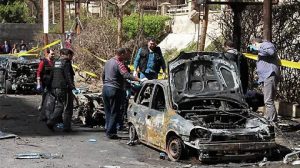
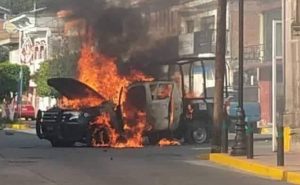
Although they have not been a systematic practice in the country, attacks with car bomb They have marked different moments of criminal violence in Mexico during the last three decades.
The country has at least 20 car bomb in almost 30 years, a figure that, although low compared to other countries, reflects the adoption of terror tactics by organized crime to sow fear, send messages and dispute territories.
The first documented history occurred in 1994, in Guadalajara, Jalisco, when a car bomb It exploded and left five people dead. The attack was attributed to the cartel Arellano Felix and it is considered one of the most serious episodes of high-impact violence recorded in the country during the 1990s.
Starting in 2010, these attacks reappeared in the context of the so-called war on drug trafficking promoted by Felipe Calderon. That year, explosions were reported in Ciudad Juárez, Chihuahua, one of them resulting in four deaths, attributed to La Línea, in addition to another attack without fatalities in the same city. In parallel, Los Zetas began to use this method in various parts of the northeast of the country.
Between 2010 and 2012, municipalities of Nuevo León and Tamaulipas recorded multiple attacks. Ciudad Victoria accumulated four events—two in 2010 and two in 2012—with a total of two deaths; Nuevo Laredo reported at least three attacks in 2012, all without victims; while Linares and Santa Catarina had explosions in 2011 with no deaths. In Zuazua, Nuevo León, an attack in 2010 left two dead.
violence with car bomb It also spread to the center of the country. In 2011, an attack in Tula, Hidalgo, left one dead, attributed to Los Zetas, while in 2021 another event was documented in that same area, without fatalities, linked to the Pueblos Unidos group.
In recent years, this form of attack has been linked to Jalisco New Generation Cartel (CJNG). In 2024, attacks were recorded in Celaya, Acámbaro and Jerécuaro, Guanajuato, all without victims. However, in 2025, a car bomb in Coahuayana, Michoacán, caused the death of five people, one of the deadliest episodes of this type in the country’s recent history, in addition to another attack recorded that same year without a fatal outcome.
According to the geographical and chronological count shown on the map prepared by the Autonomous University of Coahuila, these attacks have been concentrated in specific contexts, generally linked to organized crime disputes.
The objective is not only to cause immediate damage, but to generate terror, display operational capacity and send messages to rival groups as well as to the authorities and society in general.