

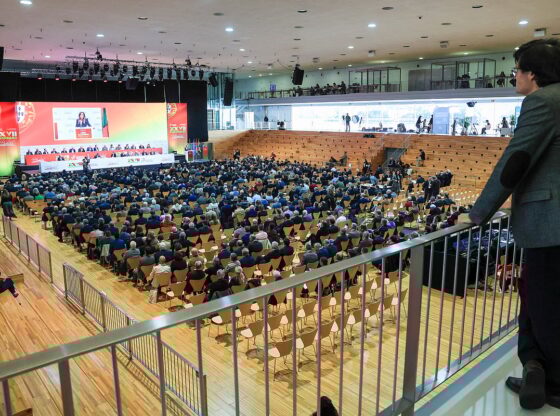

The National Association of Portuguese Municipalities (ANMP) defended this Saturday, December 13, that regionalization is essential to end an “unequal and unbalanced” country, making national interests compatible with those of the various territories.
“ANMP is aware of the difficulty of the regionalization process, but the years that have passed since the April Revolution allow us to conclude that, without the creation of administrative regions, we will remain an unequal and unbalanced country. These imbalances will only be overcome with public policies appropriate to the different territories”, wrote the mayors in the document Autonomy and Decentralization, to which Lusa had access and which was presented at the XXVII Congress of the ANMP, which elected Pedro Pimpão as the new president.
ANMP considers that a national regional development policy “must be articulated with all agents in the territoryso that, in decision-making processes, the interests of the country are compatible with the diverse interests of its various territories and regions”.
“Only administrative regions will be able to play this role, effectively and efficiently fulfilling the indispensable articulation of transversal policies”, defend the municipalities, in the document presented at the congress that began this Saturday and ends on Sunday in Viana do Castelo.
The ANMP therefore called for “compliance with the constitutional text, creating administrative regions” to provide “more consistent public policies”, favor “the competitive capacity of territories”, enhance “the creation of polarizing centers of growth”.
The administrative regions will also allow “political dialectic processes”, creating “additional factors of progress and development”, according to the mayors.
For the ANMP, administrative regions are essential for territorial reorganization and for “an effective administrative reform”, allowing “territorial policies closer to citizens and the deepening of administrative decentralization”.
“Administrative decentralization […] it can and should be carried out for administrative regions in those situations in which the exercise of powers requires a larger territorial dimension, in this case, a regional dimension”, he indicated.