

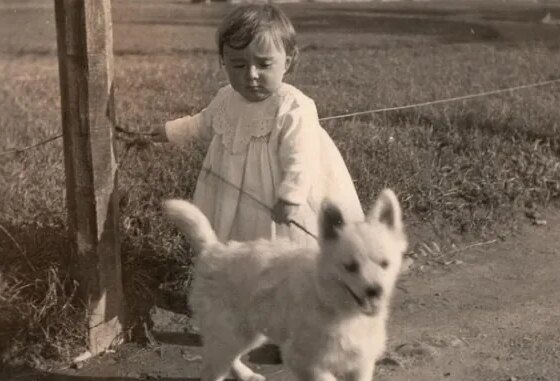

“Today they announced to me that I will finally be able to reunite with my parents! I will also go to the German field where they work and that way I will be able to see them again and be with them. I am so happy! Tomorrow I leave for Germany.” Elena Colombo She is ten years old when she writes this postcard – her last postcard – to her friend Bianca. It is April 4, 1944 and she is being held in the Fossoli concentration camp. The next day, April 5, at the Carpi freight station, she will be pushed into a cattle car. After five days in appalling conditions he will arrive at Auschwitz and She will be taken immediately to the gas chamber.
The deported Jews had only one consolation left: family. Parents and children were arrested together, often grandparents, uncles and cousins as well, and together they faced captivity and the sealed wagon. Caught in a tragedy as unexpected as it was unimaginable, the Jews had their loved ones as their only and irreplaceable support. Elena Colombo did not have that fortune: hers is the only documented case in the Italian Shoah of a child who had to face arrest, deportation and death alone.
In Turin in the 1930s, the Colombo family was, like many Jewish families of the time, secular, bourgeois and firmly monarchical (Carlo Alberto was the first to grant Jews civil rights). Emancipation had been accomplished, and assimilation seemed close with the multiplication of mixed marriages. Elena was born in 1933. Her father, Sandro, had been a lieutenant in the King’s Bombers and, after the war, opened a small company that produced packaging for sweets. His mother, Wanda, was a young woman remembered by everyone as ‘beautiful’.
When Elena is five years old, Mussolini and the king sign the racial laws: she will never be able to go to public school. Thus begins an inclined plane that in a few years will lead to a precipice. In December 1942, the family took refuge in Rivarolo Canavese; thence, after September 8, 1943when Germans and fascists unleash the hunt for the Jew, they will move to a cabin at the top of Forno Canavese, protected by the parish priest and by the ‘Monte Soglio Group’, one of the first partisan gangs in Piedmont.
On December 8, the Germans arrived in Forno, and after two days of combat they captured and shot eighteen partisans. Sandro, Wanda and Elena are arrested and taken to Turin, where an unprecedented and unexplained episode occurs: the parents are imprisoned and in January they will leave for Auschwitz without ever returning. Elena, on the other hand, is entrusted to a friendly family, where she remains for almost three months before being arrested again by the SS. The reason for this remains a mystery.
To reconstruct the girl’s story, in a volume recently published by Giuntina with the title Elenait is Fabrizio Rondolinojournalist and writer, who thus rescues a painful family history: his father Gianni was Elena’s first cousin.
The book becomes the occasion for a retrospective journey to the Colombo family, from the knight Giuseppe ColonnaRondolino’s great-great-grandfather, liberal and philanthropist, a very rich money changer ruined by a failed speculation, to grandmother Marcella, with her jokes about Jews and her recipes for sweets and donuts, reproduced verbatim.
Through unpublished documents and testimonies (including those of two schoolmates), family memories, letters and postcards, Rondolino reconstructs some fragments of Elena’s life. They are like flares that illuminate a life like so many: Flait the dogto whom she was very close and who waited for her every day after school; piano classes; the blonde braids she was very proud of; the small fights with friends (“she was a leader”); ski holidays in Cogne and Bardonecchia; summers in Liguria. In that life, like so many others, tragedy breaks out.
When describing the different phases of the deportation, the book uses only the testimonies of the survivors who were with Elena in Fossoli and in the cattle cars in those days. There are no comments, adjectives are scarce. It looks like a documentary. There are only facts, supported by an imposing bibliographic apparatus: “And the facts – writes Rondolino – do not live on emotions or feelings, but on documents and testimonies: because any other possible rhetorical structure – fiction like invective – runs the mortal risk of not telling the unimaginable of the Shoahbut to make it too easily imaginable, that is, compatible with our imagination, therefore predictable, and ultimately normal.”