


Published On 6/12/2025
|
Last update: 00:23 (Mecca time)
The 2025 Arab Cup, currently being held in Qatar, caught the attention of observers and analysts, after it revealed close levels among the participating teams, and resulted in completely unexpected results.
In the first group, Palestine and Syria continue to surprise by topping the teams of Qatar and Tunisia, who were considered before the start of the tournament as prominent candidates to advance to the next round, especially since they had previously qualified for the 2026 World Cup.
Read also
list of 2 itemsend of list
The Kuwaiti national team also surprised everyone by snatching a valuable point from the Egyptian national team after it was close to achieving victory, while the Sudan national team wasted a victory that was within its reach against Algeria, the holders of the last edition’s title, who settled for a draw despite playing the second half with 10 players.
In this context, Al Jazeera Net contacted a number of technicians, players and media professionals to find out the reasons for the brilliance of teams that were not within the nominations circle, compared to the faltering of traditional teams that have a strong history and presence in the Arab championships.
Readiness of the teams qualifying for the playoff
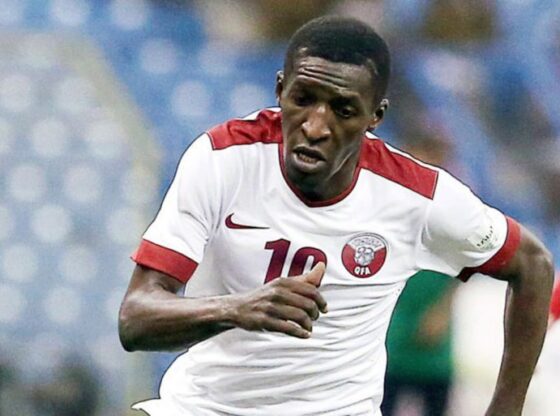
Mishal Abdullah, a former Qatar national team player, believes that some teams competing in preliminary qualifiers before the tournament has given them greater readiness to enter the competition.
Speaking to Al Jazeera Net, he said: “The teams that played the qualifiers benefited a lot: Kuwait, Syria, Sudan, Comoros and Palestine. They entered the tournament atmosphere early compared to the teams that started their journey from the group stage. It is similar to the World Cup qualifiers when we played with Oman and Saudi Arabia with Indonesia before the UAE and Iraq entered, and this gave us a clear advantage.”
He adds: “We saw Palestine, Syria, Sudan, and even the Comoros perform at great levels. Against Morocco, for example, and despite the Comoros’ confusion in the first half, they came back strong in the second, as they did against Yemen after overturning their deficit to a draw.”
Wars and difficult circumstances create additional motivation
Mishal Abdullah points out that the harsh conditions experienced by the peoples of Palestine, Syria, Sudan and Iraq have created great psychological and moral motivation for the players of these teams.
He says: “There are players who want to bring joy to their people. We saw the clip of the Tunisian player who apologized to the Palestinian fans after his second goal in a touching humanitarian scene. The players want to tell the world: Despite the harsh circumstances, we are still able to make a difference. Palestine has been without a league for years, and many players have lost their families. This generates a high fighting spirit.”
Jordanian sports commentator Khaled Al-Ghoul agrees with this opinion, adding: “Expectations were that the participation of these teams would be formal, but the response was strong on the field from Sudan, Palestine and Syria. But the real ruling will appear in the knockout rounds.”

The calendar overlaps between the Arab Cup and the African Nations
Regarding the impact of the approaching date of the African Cup of Nations and the World Cup on the levels of some teams, Khaled Al-Ghoul says: “The two tournaments are close in time, but I do not see that the fear of injury was a direct reason for the decline in the levels of the major teams. Morocco and Algeria, for example, will not compete in the African Nations on the current list, with the exception of Tunisia. In addition, the Arab Cup is an important tournament and has significant financial incentives, which makes dealing with it serious.”

As for the Omani national team player, Ahmed Khamis, he saw that the tournament represents an ideal stage for preparation: “On the contrary, the Arab Cup is a very important opportunity for all teams. African teams in particular can prepare for the Nations Cup in an excellent way through strong matches in this tournament.”