

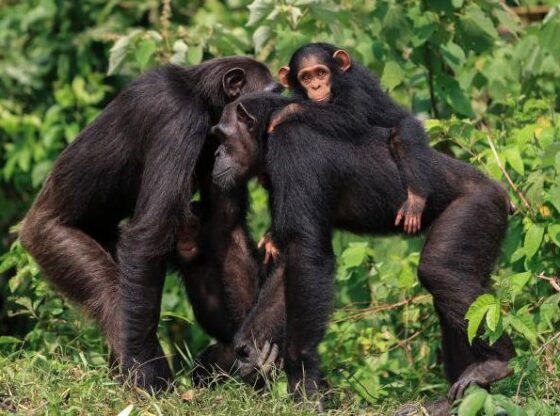

A study that examined the monogamous lifestyles of different species found that humans are a bit like meerkats when it comes to pairing.
In our love lives, we are more like these social and close-knit mongooses than our primate cousins, a classification of monogamy developed by scientists suggests.
At 66% monogamy, humans score surprisingly high, far higher than chimpanzees and gorillas, and on par with meerkats.
However, we are by no means the most monogamous of creatures.
The first place is occupied by the Californian mouse, a rodent that forms inseparable bonds for life.
“There is an elite league of monogamy, in which humans are comfortable, while the vast majority of other mammals take a much more promiscuous approach to mating,” said Mark Dyble, a researcher at the Department of Archeology at the University of Cambridge.
In the animal world, pairing has its advantages, which could explain why it has evolved independently in multiple species, including ours.
Experts have proposed various benefits to so-called social monogamy, in which pairs come together for at least one breeding season to care for their young and ward off rivals.
Dyble examined various human populations throughout history, calculating the proportion of half-siblings (individuals who share the same mother and the same father) compared to half-siblings (individuals who share either the mother or the father, but not both).
Similar data were collected for more than 30 social monogamous mammals and other species.
Humans have a 66% sibling monogamy rate, ahead of meerkats (60%) but behind European beavers (73%).
Meanwhile, our evolutionary cousins are at the bottom of the table: mountain gorillas with 6%, and chimpanzees with only 4% (as does the dolphin).
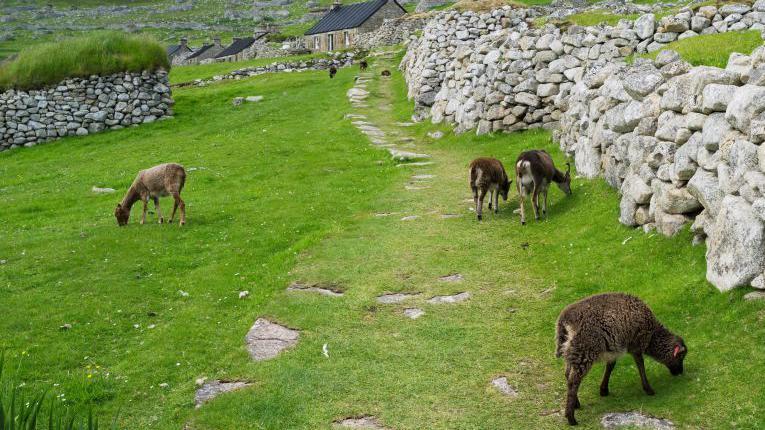
In last place is the Soay sheep, from Scotland, where females mate with multiple males, with 0.6% of sire and dam brothers.
The Californian mouse took first place, with 100%.
However, being classified alongside meerkats and beavers does not mean our societies are the same: human society is completely different.
“Although the proportion of siblings that we see in humans is very similar to that of species such as meerkats or beavers, the social system we see in humans is very different,” Dyble told the BBC.
“Most of these species live in social groups similar to colonies or, perhaps, in solitary pairs that move together. Humans are very different. We live in what we call groups with multiple males and multiple females, within which there are these monogamous or stable pair units,” he explained.
Kit Opie, a professor in the Department of Anthropology and Archeology at the University of Bristol, who was not involved in the study, said this is another key element in understanding how monogamy emerged in humans.
“I think this article gives us a very clear understanding that, over time and in different places, humans are monogamous,” he stated.
“Our society is much more like that of chimpanzees and bonobos; we’ve just taken a different path when it comes to mating,” he added.
The new study was published in the scientific journal Proceedings of the Royal Society: Biological Sciences.

click here to read more stories from BBC News Mundo.
Subscribe here to our new newsletter to receive a selection of our best content of the week every Friday.
You can also follow us on YouTube, Instagram, TikTok, X, Facebook and in our new whatsapp channel.
And remember that you can receive notifications in our app. Download the latest version and activate them.