

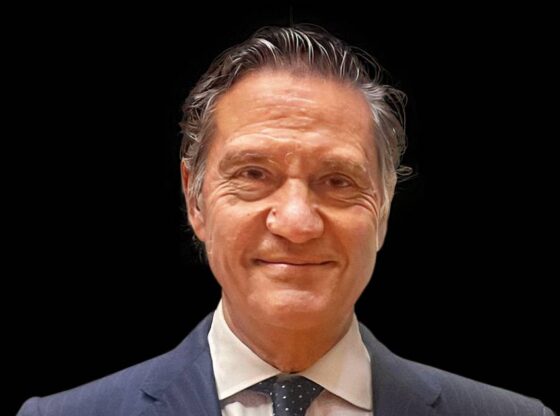

October 7, 2007:
After enjoying it in London, in Moscow I saw Tom Stoppard’s Russian trilogy, “Coast of Utopia” at RAMT- Rossisskiy Akademitchesskiy Molodejniy Teatr (National Youth Theatre). I watch the boldness of a play by a non-Russian about Russians and what Russians might think of themselves being staged in Mother Russia.
At the end of the performances, I am alone with Stoppard in a back room. Evident physical charisma, paradoxically velvety voice. I begin with almost anodyne questions about what it would be like to be there, what it would feel like to see Herzen, the one he gave life to, saying “his” text in the “right” language – this Herzen from whom the memorable adage “History does not have a libretto” remained, which went against the inexorable determinism that paved the way, after Hegel and Marx, for the Revolution and the Dictatorship.
Later, almost at parting, I confront him with the responsibility of “thought leader” in moral terms that, with his theater, he represents for me. I tell you that my parents’ generation was initiated into the agonies of moral dilemmas precisely with the Russians, with “Crime and Punishment” at the head, but that in current times it was the clarity of the humanist message of his plays, the ethical support of a journey. Herzen and not Lenin. Turgenev more than Gorky. Supporting dissent and the courage of nonconformity.
The entire “Coast of Utopia”, for me, is the exaltation that lives, the roller coasters of families, loves, friendships, are more necessary for the moral order of society than the ideological constructions of models of society that require the sacrifice of generations in the name of perfections that will one day arrive. Stoppard realized that I was making a believer’s statement to him, from disciple to guru, and confirmed that there was a consistent line of moral content that could be inferred from his plays. (I think he secretly enjoyed being placed in the same league as Dostoevsky.)
I tell you that it was easy for pieces like “Rock and Roll” or “Costa da Utopia” to resonate in Portugal because, with due proportions, we shared with the Czechs and others from the East the censorship, a closed regime and the euphoria of opening up to a free world, in our case in 1974. He looks at me with the air of someone who is beginning to understand better what I was there, in Moscow, doing.
November 29, 2025:
Tom Stoppard is dead!
I review what I wrote about the playwright since that magical moment when I saw ‘Arcadia’ at the National Theatre, in 1983. What runs through these texts is my deep conviction that Stoppard was, not only, the most intelligent playwright of our era, but the one who dealt in the most serious and stimulating way with the great polarities that define modern consciousness. I see him as someone who got the diagnosis right (and gave clues for therapy) of the divided Western soul.
The central and recurring theme of his work is effectively the opposition between the “classical” and “romantic” temperaments, but it is never an abstract academic game, rather an existential fault line that crosses science and art, reason and emotion, order and chaos, politics and love, Apollo and Dionysus. When enjoying his pieces you can always identify this tectonic fault.
In “Arcadia”, it is Newtonian determinism versus chaos theory, the brain versus the heart, the aristocratic landscape garden versus the anarchic Gothic jungle and, finally, the “attraction that Newton left out” – carnal, disruptive, deadly love. In “The Invention of Love”the opposition is between the emotional repression of the Victorian classicist Housman and the liberating romantic eros of Wilde, Latin scholarship versus lived desire and passion. In “Travesties”, it is Joyce’s aesthetic revolution versus Lenin’s revolutionary practice (“If one cannot be an artist, one must be a revolutionary… or is it the other way around?”). In the trilogy “The Coast of Utopia”, the question expands to the complete historical panorama with Bakunin’s anarchic romantic insurrection in counterpoint to Herzen’s skeptical, liberal and painfully classical intelligence, with Turgenev, the artist, trying to remain human in the middle.
I do not see these positions as symmetrical or morally equivalent. I subscribe to a clear emotional and ethical preference: the romantic impulse is necessary, sensual, vital, but almost always catastrophic when it tries to govern the world. The classic temperament is colder, more honest and, in the end, more human. Herzen, not Bakunin; art, love and private decency, and not the utopian coercion that demands “the sacrifice of generations” in the name of a future perfection that never arrives. For me, Stoppard is, above all, a profoundly anti-totalitarian writer who disguises his fierce liberalism with verbal pyrotechnics of enormous subtlety and magnificent structural audacity.
What moved me most was his control over time. The final waltz in ‘Arcadia’, when 1809 and the present day simultaneously occupy the same stage space, was for me an almost magical experience in which the power of theater literally bends space-time and makes each of us, spectators, true “Time Travellers” Something similar is felt in ‘The Invention of Love’, when Stoppard, playing with time again, allows the elderly ‘I’, poet-teacher, the opportunity to settle some scores with the young ‘I’ student at Oxford University. And, again, in the complex dramaturgical tapestry of the nine hours of ‘Utopia Coast’, where the whole tragicomedy of Russian radical thought becomes simultaneously distant and intimate.
I am deeply irritated by the lazy accusation that Stoppard is overly cerebral or emotionally cold. On the contrary, I insist that his plays require both a high IQ and a high emotional intelligence; They just won’t work for those who go to the theater out of dilettantism or laziness. Intellectual wonder is the price of admission, not a substitute for devastating emotional reward. The moment comes when the ideas suddenly turn to tears – Thomasina’s off-stage death, Belinsky’s prophetic fury, Herzen’s exhausted recognition that “History has no libretto”, and the revelation of the tragic annihilation that awaits the Merz and the Jakobovicz in ‘Leopolstadt’.
I see Tom Stoppard as the essential playwright of the late 20th and early 21st centuries because he wrote, with unparalleled humor, formal boldness and moral seriousness, the eternal dispute within liberal civilization between reason and emotion, order and freedom, classicism and romanticism. He demonstrated that the dispute can never be definitively resolved, but that choosing the wrong side (the utopian, coercive side of Bakunin-Lenin) costs millions of lives, while opting for the skeptical, ironic, human side of Herzen-Turgenev preserves society and the possibility of both art and love.
Your theater is difficult because life is difficult; it is beautiful because it remains faithful to both intelligence and feeling; And yet, it is a bearer of hope – because in a tragic arcadia, or even after every shipwreck in the utopian cabotage, people will continue to dance.