

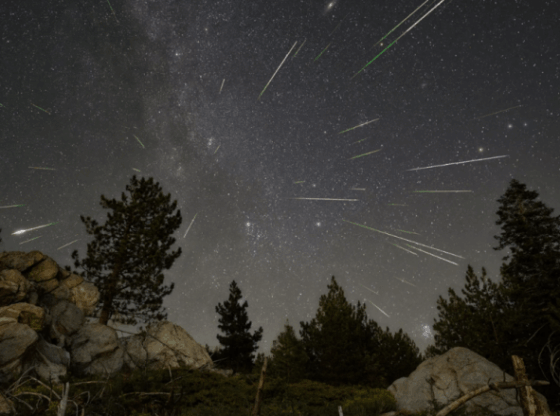

The astronomical events of December will close the year with outstanding phenomena, and among them the Geminid meteor shower considered the most intense and colorful of the astronomical calendar. Its peak will take place during the middle of the month, offering a wide observation window for amateurs and experts.
READ HERE: Cold supermoon, planetary conjunctions and more astronomical events in December 2025
Exact date and time of the Geminid shower in Yucatán
According to the astronomy site Star Walk, the time of the peak will vary depending on the time zone where you are in Mexico:
- Pacific and Northwest Zone (for example, Baja California, Sonora, Ciudad Juárez): 01:00 am
- Central Zone (includes Mexico City, Guadalajara, Monterrey, Mérida): 02:00 am
- Southeast Zone (like Quintana Roo, Yucatán): 03:00 am
Although the peak occurs around those times, the Geminids offer a wide viewing window. It is recommended to go out to the sky from midnight of December 14, or even since the night of the 13th, to take advantage of the rise of the radiant.
Any time between 0:00 and 4:00 am can put on a good show, especially in places with little light pollution.

Tips for seeing the Geminid meteor shower in Yucatán
- To fully enjoy the Geminids 2025choose a place away from urban lights, such as rural areas, hills or beaches. The night of December 13 to 14 will be especially favorable, as the Moon will be in its waning phase, which will keep the sky dark and allow better visibility of meteors.
- You don’t need telescopes or binoculars: your eyes—once adapted to the darkness—will be the best tool. You’ll see bright, long-tailed meteors, some with yellow, green, blue or red flashes.
- If you want to maximize the experience, you can use an astronomical application (e.g. Sky Tonight) to find out the exact position of the radiant in your area. This will let you know when it is highest in the sky – that will be the best time to see the most meteors.
🌠 The most anticipated meteor shower of the year is yet to come
Get ready to enjoy the Geminids, one of the brightest and most intense meteor showers in the astronomical calendar.
📅 When to see it: Its peak will be the night of December 13 to 14.
⏰ Best time:… pic.twitter.com/omy4ubJ865— El Mitotero (@elmitoteromx) December 4, 2025
Why are the Geminids special?
According to National Geographic, unlike most meteor showers, which come from comets, Geminids originate from asteroid 3200 Phaethon. This celestial body, six kilometers in diameter, follows an elongated orbit similar to that of a comet, but without a tail of dust or gas, which excludes it from that category.
Los meteors of this rain are usually shiny, with long tails and one diverse range of colors ranging from white to green, blue, yellow and even red. Its hues are due to the presence of metals such as sodium and calcium in the fragments that break off from the asteroid.
Although most of the flashes belong to the mainstream, some may be sporadic meteors or come from minor showers that also occur in December.