

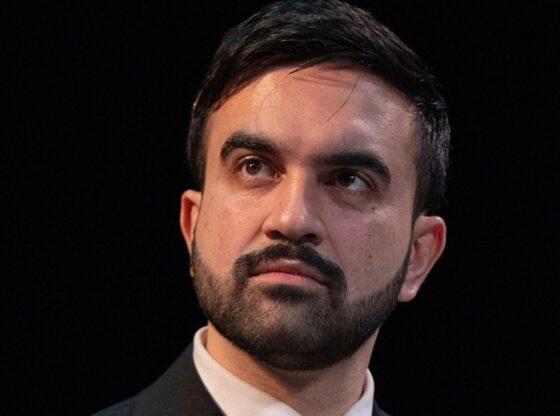

Zahran Mamdani’s expected victory in the election for mayor of New York City represents more than just a local political surprise; It is an in-depth case study that offers critical insights into the changing nature of contemporary global politics.
His campaign, organized by the Democratic Socialists of New York City (NYC DSA), illustrates a viable blueprint for forces of change around the world seeking to challenge entrenched political and financial institutions, especially in the face of growing economic anxiety and shifting political alliances.
By analyzing the mechanisms, messages, and alliances formed by Mamdani, we can generalize lessons that redefine political strategy in the modern era, moving beyond narrow traditional political narratives to address the global challenges faced by movements seeking change at the global level.
First: The priority of livelihood concerns – restoring economic populism
The most fundamental lesson from Mamdani’s campaign is to reassert economic concerns as the primary mobilizing force in mass politics.
Mamdani’s relentless focus on the crushing cost-of-living crisis—advocating for policies like freezing rent for millions of renters, providing free city buses, creating city-owned grocery stores, and funding universal child care through taxes on the wealthy—connected closely with voters across multiple demographic lines.
This success is a direct rebuke to centrist political parties and discourses globally, which often fail to address livelihood issues affecting the poor and middle classes.
After the previous general elections, American Democrats were criticized; Because of their neglect of the material issues affecting the American working class, a mistake that Mamdani corrected.
This strategy underscores the long-held belief in contemporary politics that directly addressing the livelihood concerns of the classes that pay the price for the push toward the neoliberal model of economics is key to mobilizing support.
The campaign successfully identified a global problem: the growing gap between marginalized classes and the affluent in urban centres. New York City, described as the richest city in the world, witnesses a very large number of people living in poverty or trapped by high costs.
Mamdani described the campaign as a resistance to New York’s transformation into a “playground for the rich”; With the aim of returning it to a working class city.
Mainstreaming economic attractiveness
This focus on affordability and economic dignity is not unique to New York; Rather, it reflects a global political moment. In the Arab region, fundamental economic grievances, corruption, and the failure of neoliberal policies often fuel political activism and mass protests.
For example, youth politics in the MENA region constantly intersect with the lived experience of economic marginalization, leading to calls for social and economic justice.
In Morocco, the protests were rooted in long-standing grievances regarding social justice, economic corruption, and a decent standard of living. Likewise, in Jordan, major protests against economic austerity and corruption were preceded by protests against the Israeli gas deal, showing how economic anxiety conditions the political space.
Mamdani’s ability to activate nonvoters (expand the electorate) reflects the mobilization potential we see elsewhere in the world, where political engagement is often a reaction to deep-rooted social and economic issues.
Mamdani’s message confirms that politics in contemporary times is often defined by the tangible feeling of economic fragility and the failure of existing political systems to ensure a decent life.
The lesson for political movements internationally is that a big vision focused on comprehensive and direct material benefit for all citizens can overcome entrenched political opposition and massive financial spending. Mamdani’s opponents spent $35 million to support his rival.
Second: The strength of the infrastructure of the popular movement and mobilization
Mamdani’s potential victory is inseparable from the Organization of Democratic Socialists’ organizational prowess, highlighting the global feasibility of a movement-driven electoral model over traditional political machines.
The basic strategy involved building a massive volunteer-driven apparatus, capable of expanding the voter base rather than simply persuading the usual voters. The campaign mobilized more than fifty thousand volunteers, who knocked on more than one and a half million doors throughout the city. This reliance on scale and deep engagement was crucial.
Mainstreaming organizational capacity
This approach offers crucial lessons for modern political movements around the world:
1- Trust in the popular leadership base: The DSA model emphasizes the firm belief that anyone interested in the campaign is capable of doing almost anything. This model focuses on building working-class power through electoral campaigns, rather than simply relying on corporate funding or traditional political institutions.
This involved the creation of a multi-level structure (candidates, field commanders, field coordinators), which quickly trained and expanded the middle leadership layers (430 field commanders trained by the end).
This model contrasts sharply with traditional campaigns that lack this trust and ability to delegate significant responsibility to ordinary people sparked by a political movement.
2- Activating non-voters: While traditional campaigns focus on voters who have voted consistently in previous elections, Mamdani’s campaign actively targeted young voters, those who do not typically vote, and marginalized immigrant communities.
This shows that electoral success can be achieved not only through persuasion, but also by broadening the range of participants. In the districts where Mamdani won by an overwhelming majority in the primaries that preceded his official candidacy, turnout rose by more than 40%, compared to previous elections.
This focus on mass participation and leadership development mimics the strategies pursued by effective political groups outside established party structures globally.
In Sudan in 2019, the Professionals Association formed a powerful revolutionary body by quickly organizing protests and mobilizing the masses against the regime. Likewise, in contexts such as Türkiye, where political space is restricted, state hegemony often pushes opposition movements toward non-revolutionary, but organized, forms of resistance.
Najah Mamdani confirms that building capacity for sustainable, decentralized and scalable organizing is crucial to the movement’s survival and electoral continuity in the modern era.
Third: The comprehensive alliance and the intersection of identity and class
The Mamdani alliance was built on the foundation of a broad, multi-ethnic and multi-class coalition that radically redefined the electoral base of politics. He succeeded in uniting liberal voters and traditional youth, while increasing voter turnout among Muslims, South Asian immigrants, Latinos, and even the working class that had previously leaned toward Donald Trump.
Mamdani, as the first Muslim and the first South Asian mayoral candidate for New York City, used his identity (born in Uganda, of Indian descent, Muslim) not only symbolically, but as a direct vector of mobilization.
His campaign worked to demonstrate the concept of descriptive representation, whereby voters feel more empowered when their officials share their ethnic or religious identity. This was critical in mobilizing New York’s South Asian and Muslim communities, which had traditionally been ignored by campaigns.
Dedicated organizers and multilingual communication (Urdu, Bengali, Spanish, Arabic) tailored the campaign to these diverse communities, treating them as valued voters.
Mamdani’s background and outspoken foreign policy stance—particularly his criticism of Israeli policy and Indian Prime Minister Narendra Modi—injected transnational political debates directly into domestic races.
This led to a political dispute, angering some Hindu-American groups and pro-Zionist establishment figures. This experience shows that contemporary diaspora politics are not monolithic; A shared heritage can mobilize, but ideology, religion and views on foreign policy (such as the anti-Modi stance) create sharp internal divisions.
Mamdani’s coalition included working-class and middle-class renters in white, Latino, and Asian neighborhoods. The focus on affordability has cut across demographic divides, winning support from areas associated with East Asian and Latino communities, and even parts of the white working class that leaned toward Trump in the recent presidential election.
This suggests that a unified economic agenda for the working class could transcend cultural battles, as Mamdani successfully demonstrated that the focus on class struggle should not give way to the primacy of social issues.
Fourth: Global solidarity and the rise of the “Gaza policy”
Mamdani’s nomination highlights a crucial shift in contemporary politics: the integration of human rights issues and global solidarity—which she embodies.”Gaza policy“- in the basic electoral platform, especially among younger and progressive voters.
Mamdani, a critic of Israel, has accused it of genocide in Gaza, and supports the Boycott, Divestment and Sanctions movement. He refused to back down on these issues, even as his opponent, Cuomo, tried to make Israel and anti-Semitism a focus of the campaign.
Indicators showed that voters were either willing to ignore his controversial stance or actively agreed with his critical views on Israel, prioritizing his strong economic platform.
Polls indicate a growing rift among American Democrats, especially young people, who are increasingly critical of the Israeli government, challenging the long-standing consensus that consistent support for Israel is essential for political legitimacy.
This trend has international resonance. In many parts of the world, youth and progressive movements are increasingly giving priority to transnational solidarity. Mamdani’s experience confirms that movements must crystallize a comprehensive political vision that refuses to sacrifice one group for the sake of another, realizing that systematic exploitation (such as immigrants) weakens the status of all workers.
His refusal to “blame anyone” on social issues like LGBT or immigration rights, even with his intense focus on the economy, makes his agenda more credible.
Fifth: The demand for general excellence and transformational governance
Mamdani offers a final critical lesson at the global level, regarding the definition of political effectiveness and the challenge of governance.
Mamdani embraced the “abundance agenda,” i.e. advocating a model of government that sought not only to redistribute available resources (the traditional proposition of democratic socialism), but also to radically increase the public supply and production of basic goods and services to ensure a decent life for all.
He also insisted on the virtue of “general excellence,” which means that services should be designed to meet citizens’ expectations and continuously improve their lives. He has argued that any instance of public inefficiency provides an opportunity for arguments against the public sector itself.
His commitment to government efficiency, evident in his criticism of previous administrations (such as Cuomo’s mismanagement of the Metropolitan Transportation Authority, which led to a loss of capacity and efficiency), recasts traditional right-wing language about bureaucracy and waste as core left-wing concerns.
For the left to succeed in implementing ambitious public programs (such as free transportation or universal child care), they must first prove that the government can work effectively.
Mamdani and the New York City Democratic Socialists realize that winning office is only the beginning of the struggle. Drawing on a theory that highlights latent resistance within the state apparatus (the so-called “bomb chambers of government”), they recognize that implementing a transformative agenda requires not only elected officials, but also an organized force outside parliament (the Democratic Socialists of America); To coordinate action, impose legislation, and confront opposition from the capitalist class, the judiciary, and the entrenched political machines.
This is a universal necessity for governance that aims for real change. Change movements – as we witnessed in the Arab uprisings in their successive waves, from the municipal level to the national level – often face enormous pressure from market forces and hostile political parties.
Mamdani’s plan for transformative reforms that can be achieved within four years, such as a rent freeze, shows a pragmatic and ambitious approach in using limited government power while preparing the out-of-power movement to defend those gains.
The shift from electoral campaigns to shared governance (coordinating with elected officials through bodies such as the Committee of Socialists in Power) provides a model for political organizations seeking to maintain accountability and leverage their electoral victories for systemic change.
Conclusion
In conclusion, Zahran Mamdani’s candidacy is a modern political laboratory that shows how to redefine politics in the face of the widespread institutional failure that currently exists throughout the world.
The lessons for contemporary politics are clear: it must be built on trust in the capabilities of the grassroots, and a successful platform must prioritize immediate livelihood demands, while rigorously integrating social justice and global solidarity for human rights.
Electoral victories must be understood as the beginning of a broader, more coordinated movement necessary to combat entrenched resistance to capital and bureaucracy, or what is sometimes termed the “deep state.”
He presents Mamdani’s scheme, characterized by high appeal, digital fluency and an agenda that puts classes first It embraces intersectionalitya powerful example of how movements can channel contemporary frustration—whether from rising rents in New York or systemic economic marginalization around the world—into viable political force, proving that what seems impossible can be accomplished.
The campaign suggests that the future of successful politics lies not in moderate positions aimed at creating an imaginary political middle ground, but in leading with a bold, organized and authentic vision to the forces of change around the world.
The opinions expressed in the article do not necessarily reflect the editorial position of Al Jazeera Network.