


Published On 24/10/2025
|
Last update: 15:54 (Mecca time)
The International Monetary Fund on Friday urged Asia to reduce non-tariff barriers and seek regional trade integration to reduce its vulnerability to US tariffs and global financial shocks.
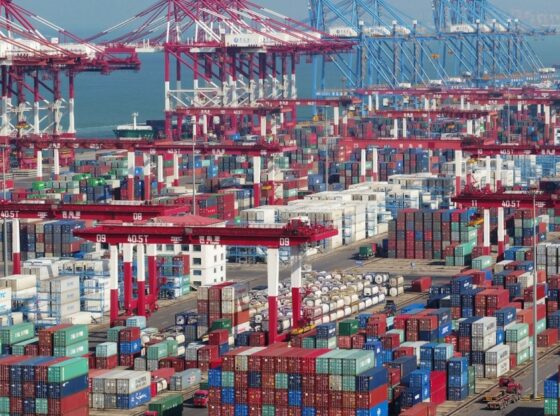
The IMF said in its Economic Outlook for Asia report that trade remains central to economic growth in Asia, and that China serves as a hub for supply chains to produce goods around the world.
He added that this makes Asia vulnerable to the trade tension between the United States and China and the tariffs imposed by President Donald Trump.
The report stated that the trade dispute with the United States and the boom in investment in artificial intelligence led to a rise in intra-regional trade on the continent.
The report noted that further enhancing regional trade integration, including removing trade barriers, could help Asian countries diversify export markets, reduce costs and erase some of the negative effects resulting from tariff shocks.
“If Asia becomes more integrated, that in itself provides a buffer against external shocks,” Krishna Srinivasan, director of the IMF’s Asia and Pacific Department, told Reuters.
The report pointed out that Asia could benefit from seeking to conclude broader trade agreements, such as those in the European Union, as the current focus on bilateral agreements creates overlapping rules and inconsistent standards.
The report said that reducing non-tariff barriers, which increased during the Corona pandemic and are still widespread in Asia, could achieve significant benefits.
Srinivasan stated that with increased regional trade integration, Asia could see GDP rise by up to 1.4% in the medium term, and the economies of the Association of Southeast Asian Nations (ASEAN) by up to 4%.
The International Monetary Fund currently expects the Asian economy to grow 4.5% in 2025, slowing from 4.6% last year.
Growth is also expected to decline to 4.1% in 2026 due to the impact of trade tensions, weak demand in China, and a slowdown in private consumption in emerging economies.