


Published On 9/12/2025
|
Last update: 21:58 (Mecca time)
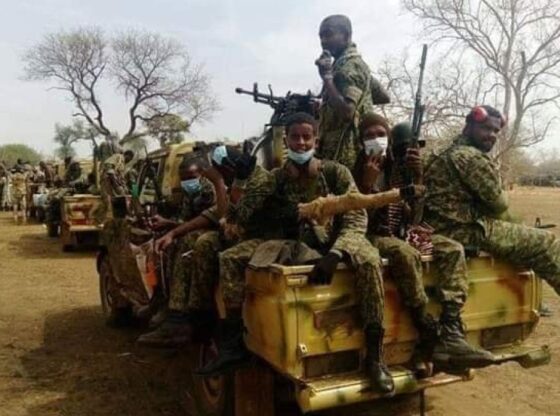
Military sources in the Sudanese army told Al Jazeera that an army force withdrew from the cities of Babanusa and Heglig in Western Kordofan, southern Sudan, and arrived in the state of South Sudan with full equipment, while local government sources considered the withdrawal from the region “tactical.”
This comes as the governor of the Darfur region and head of the Sudan Liberation Army Movement, Minni Arko Minawi, said – in a post on the X platform – that “those who were detained in El Fasher, women and men… had their organs and blood removed to save the wounded Rapid Support soldiers,” strongly condemning what he described as “the heinous crimes committed by the militias.”
Military sources told Al Jazeera that the force withdrawing from Babanusa and Heglig will be transferred to White Nile State, which borders South Sudan.
Al Jazeera’s correspondent said that the area where the Rapid Support Forces are expanding in West Kordofan State is considered one of the most important and largest oil fields in the country.
Al Jazeera’s correspondent stated that workers in oil companies withdrew from Heglig and left for South Sudan.
Tactical withdrawal
On the other hand, Ahmed Rahmatullah, Minister of Information and official spokesman for the West Kordofan government, told Al Jazeera that despite the loss of the Heglig region after the Sudanese army withdrew for tactical reasons, the army will continue fighting until Kordofan becomes a graveyard for Rapid Support, as he put it.
He added that the families of the army soldiers were subjected to humiliation and abuse by what he called the “Rapid Support Militia” in Babanusa and Heglig.
The spokesman for the West Kordofan state government said that the Rapid Support’s control of the Heglig fields affects the resources of the West Kordofan government, noting that after the army’s withdrawal, civilians turned into refugees in the state of South Sudan.
Rahmatullah described the RSF’s control of the oil fields in Heglig as “the most tragic” developments taking place in the state.
It is noteworthy that the Rapid Support Forces stormed the Heglig oil field yesterday, Monday, in a new development that reflects the expansion of the conflict between the Sudanese army and the Rapid Support Forces since the outbreak of war between them in April 2023.
Major facility
The Heglig field is located in the far south of Kordofan State on the border with South Sudan. It is the largest oil field in the country and a major facility for pumping oil produced from South Sudan via the pipeline to Bashayer Port in Port Sudan on the Red Sea for export, making its control a strong blow to the Sudanese energy sector.
In recent weeks, this strategic region has witnessed bloody battles after the Rapid Support Forces took control of the entire Darfur region in the west of the country at the end of October.
The attack comes despite the Rapid Support Forces announcing two weeks ago that it had unilaterally accepted a three-month humanitarian truce, and it is not the first of its kind. Last November, the Sudanese authorities accused it of launching a drone attack on the Juba oil processing station in White Nile State, which led to a temporary halt in oil exports.
Out of 18 states across the country, the Rapid Support Forces control all five states of the Darfur region in the west, except for some northern parts of North Darfur state, which are in the grip of the army, which controls most of the regions of the remaining 13 states, including the capital, Khartoum.