

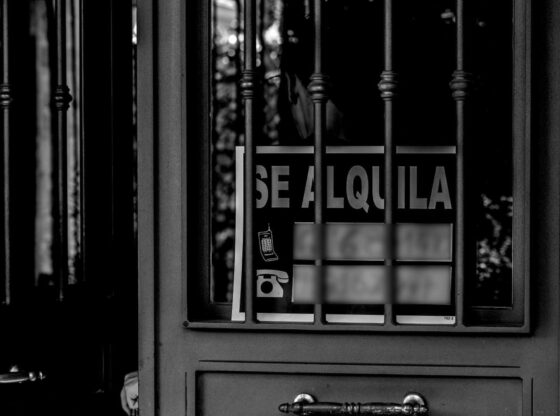

The rent control policy is gaining strength across Europe to offset the extraordinary increase in rental prices, mainly caused by a shortage of supply and the shift of demand from buying to renting. In Spain, regulation is developed through “second generation” control measures (stressed areas and specific controls) to avoid the serious distortions that these policies generated in the Spanish market from the sixties to the end of the 20th century.
The State Housing Rental Price Reference System (SERPAVI) is a recent measure that seeks to provide a range of values for setting new contracts. Its great value lies in the richness and granularity of its data (at the neighborhood level), which allows analyzing the financial pressure on permanent residence households and reflects the growing residential insecurity marked by high tenant turnover.
However, SERPAVI has a fundamental limitation that prevents it from reflecting current market prices. The tool bases its methodology on the amounts declared in personal income tax as income from rental of main residence, not in real market prices.
This information includes a mix of old rentals, income for periods shorter than a year, and contracts from different years and with different attributes (with/without garage, etc.), meaning that their averages do not show the current market value, but only what homes already rented paid in the past.
Seen from the perspective of limitation, the State Housing Rental Price Reference System (SERPAVI) functions de facto as a measure for setting maximum rental prices. Its usefulness lies in providing a reference on the quantities that are considered sustainable for a household to maintain rental housing.
Initially, its effects should be limited, since it is only applicable to main homes (the rent protectable by law), so, if the difference between the market price and the fixed price is very high, the market incentive to ‘cheat’ in the contract is enormous: the profitability of raising the price above the maximum set by the tool in the rental of a main home, using reasons other than the rent itself (garage, services, furniture…) is so high that makes it easy for this to happen if the demand is able to pay larger amounts.
If this measure is successful, the future of the most in-demand rental markets that is before our eyes is that of a segmented market (in stressed areas), in which long-term rentals will have price levels that will be increasingly accessible (since prices are capped on the rise, but income will increase), but neighboring homes that are rented in the neighborhood for shorter periods will have market prices.
The difference between both price levels will progressively increase and this will generate, on the one hand, a reduction in the rental supply from the long term to the medium term, or also the generalization of contracting with particular conditions that will ‘avoid’ the declaration of permanent housing by making it appear renting as temporary to avoid regulation.
Once again, there will be an additional distortion to that of prices, in the functioning of the market, if these regulations are not applied with a strict control system.
Third, The temporary application of these measures could generate a freeze in supply ‘waiting for the deregulation phases’, which does not seem to be able to reduce the effects of segmentation and concealment of rents.
Lastly, and most importantly, rent control that is fixed to permanent use negatively affects the quality of rented housing. The literature describes it and the evidence in Spain as well. The effect on quality has two origins.
The first consists of the differential between the renovation cost and the rental profitability. If this difference is very small, zero or negative, the owner will not update the home. The deterioration of the Spanish park during the eighties and nineties, which led to the massive sale of the property to its tenants, had this reason.
The second is more modern and there is already evidence that it is happening: the lack of supply is generating enormous competition for rental homes, with prices increasing regardless of quality: The shortage means that owners do not need to improve the home to rent it at market prices.
The final result of both is a worsening of the quality of the rented stock and a deterioration of the quality of life in the rental homes, which, together with the insecurity in the continuity of the contracts, is a good reason that justifies the application of public policy measures to avoid them.
Access to housing is a challenge that requires a structure of coordinated policy measures for its solution. Controlling prices, without compensating with increased supply, quality levels and control, clearly seems like a mistake.
*** Paloma Taltavull is coordinator of the Citizen Election Forum and professor at the University of Alicante.